




People with diabetes are at a higher risk of developing foot problems due to poor blood circulation and nerve damage (diabetic neuropathy). Even a small cut or blister can lead to serious infections if left untreated. Practicing proper diabetic foot care can help prevent ulcers, infections, and even amputation.
Do’s for Diabetic Foot Care
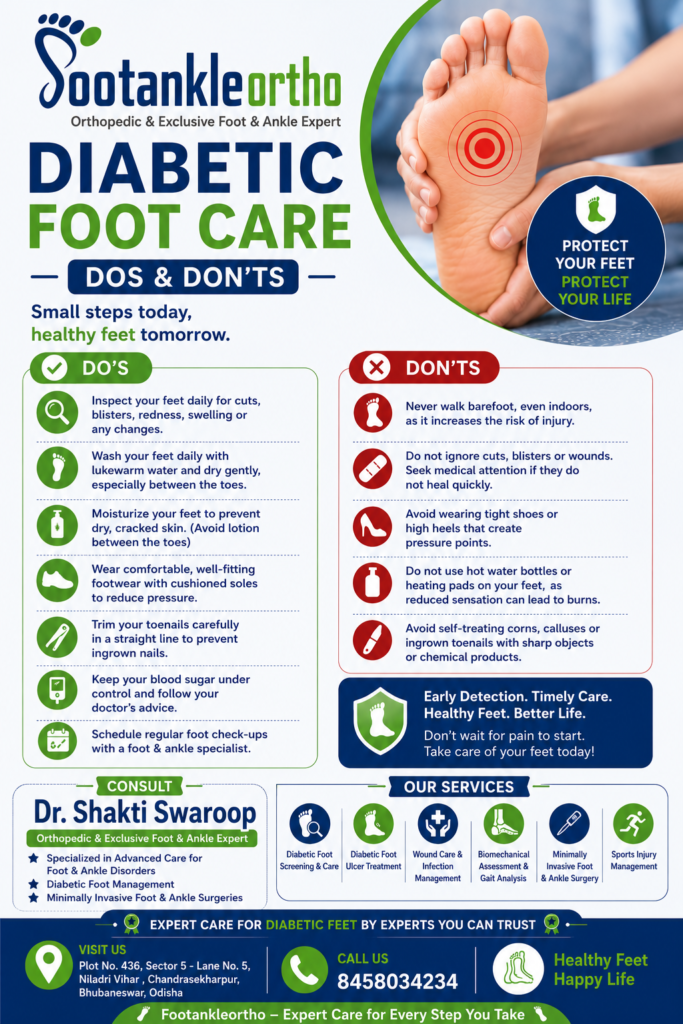
✔ Inspect your feet daily for cuts, blisters, redness, swelling, or any unusual changes.
✔ Wash your feet with lukewarm water every day and dry them gently, especially between the toes.
✔ Moisturize your feet to prevent dry, cracked skin, but avoid applying lotion between the toes.
✔ Wear comfortable, well-fitting footwear with cushioned soles to reduce pressure on your feet.
✔ Trim your toenails carefully in a straight line to prevent ingrown nails.
✔ Keep your blood sugar under control, as healthy glucose levels reduce the risk of nerve and blood vessel damage.
✔ Schedule regular foot examinations with a foot and ankle specialist, especially if you have numbness or previous foot ulcers.
Don’ts for Diabetic Foot Care
❌ Never walk barefoot, even indoors, as it increases the risk of injury.
❌ Do not ignore cuts, blisters, or wounds. Seek medical attention if they do not heal quickly.
❌ Avoid wearing tight shoes or high heels that create pressure points.
❌ Do not use hot water bottles or heating pads on your feet, as reduced sensation can lead to burns.
❌ Avoid self-treating corns, calluses, or ingrown toenails with sharp objects or chemical products.
Expert Diabetic Foot Care at FootAnkleOrtho
If you have diabetes, regular foot check-ups are essential to prevent serious complications. FootAnkleOrtho provides comprehensive diabetic foot evaluation, wound care, ulcer management, and advanced treatment for diabetic foot complications.
Click to watch For More Information on Diabetic Foot: Early Signs, Risks & Treatment
Dr. Shakti Swaroop, an experienced Foot & Ankle Specialist, offers personalized care using modern diagnostic and treatment techniques to help patients maintain healthy feet and an active lifestyle.
If you notice numbness, persistent pain, foot ulcers, swelling, or slow-healing wounds, don’t delay treatment. Early diagnosis can prevent severe complications and improve your quality of life.
Book your diabetic foot screening today with Dr. Shakti Swaroop at FootAnkleOrtho and take the first step toward healthier, safer feet.