



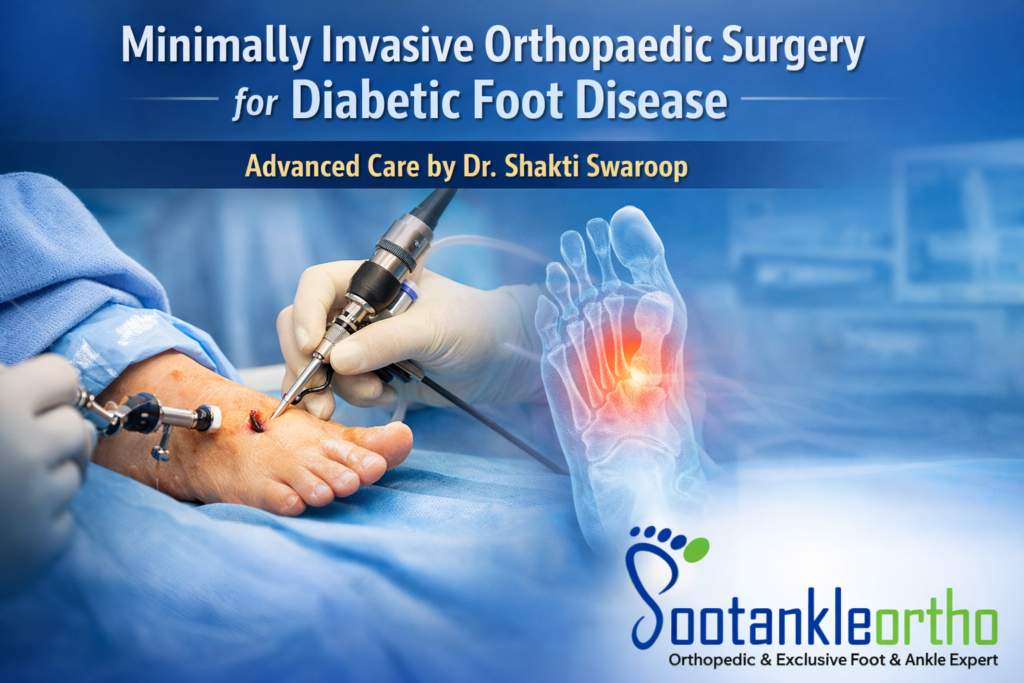
Diabetic foot disease is one of the most serious complications of diabetes, affecting millions of people worldwide. It occurs due to a combination of nerve damage (neuropathy), poor blood circulation, and foot deformities that increase the risk of ulcers, infections, and even amputation if not treated properly. Modern medical advancements now offer safer and more effective treatment options such as minimally invasive orthopaedic surgery, which helps patients recover faster with fewer complications.
Minimally invasive orthopaedic surgery involves performing surgical procedures through very small incisions using specialized instruments and imaging guidance. Unlike traditional open surgery, this technique causes less tissue damage, reduces pain, and allows patients to recover more quickly. It is especially beneficial for diabetic patients who often experience slow wound healing.
Patients with diabetic foot disease frequently develop ulcers on the sole of the foot due to excessive pressure on certain areas. Minimally invasive procedures such as percutaneous osteotomies, flexor tenotomy, and tendon lengthening help correct the underlying deformities and redistribute pressure across the foot. These procedures reduce stress on the affected area, allowing ulcers to heal more effectively and preventing recurrence.
Research shows that minimally invasive techniques can significantly improve ulcer healing time and reduce complications. Some studies have reported ulcer healing within 1.5 to 3.7 weeks, with lower recurrence rates compared to traditional treatment approaches. These procedures also minimize hospital stay and decrease the risk of infection, which is a major concern for diabetic patients.
Another advantage of minimally invasive orthopaedic surgery is improved mobility and faster rehabilitation. Because the incisions are small and tissue damage is limited, patients often experience less postoperative pain and can resume daily activities sooner. In many cases, the surgery can be performed as a day-care procedure, allowing patients to return home the same day.
However, early diagnosis and expert medical evaluation are crucial for successful treatment. Diabetic patients should regularly check their feet for wounds, redness, swelling, or numbness. Ignoring these symptoms may lead to severe infections and long-term complications.
At FootAnkleOrtho, Dr. Shakti Swaroop, an experienced foot and ankle specialist, provides advanced care for diabetic foot conditions using modern surgical techniques and personalized treatment plans. With a focus on preserving foot function and preventing complications, the clinic offers comprehensive diagnosis, minimally invasive surgery, and post-operative care to ensure the best outcomes for patients.
If you or your loved one is suffering from diabetic foot problems, timely consultation with a specialist can help prevent serious complications and improve quality of life.
Contact FootAnkleOrtho
Dr. Shakti Swaroop – Foot & Ankle Specialist
📞 Call Us: +91 8458034234, +91 8587904234
🌐 Website: https://www.footankleortho.com
Early treatment can save your foot and protect your health. Book your consultation today with Dr.Shakti Swaroop.